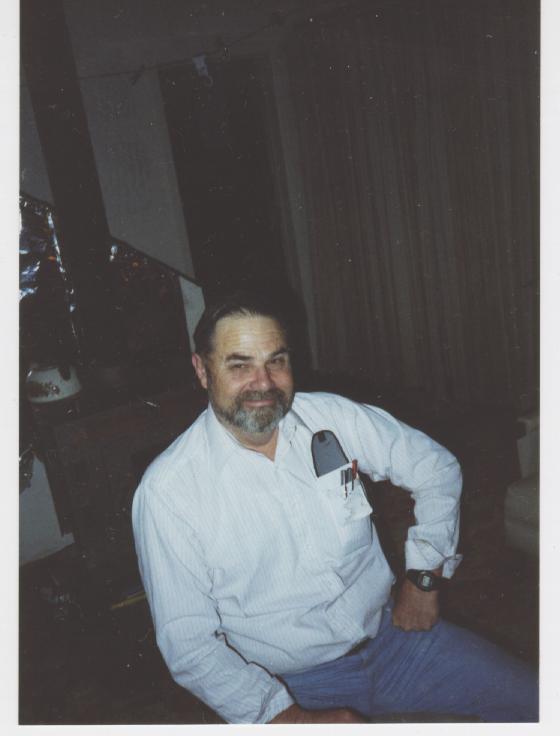
Back in '86 and '87 I taught 2nd and 3rd grades at tiny Malakoff School. One of the really neat things about working at Malakoff School was our location, east o' the sun and west o' the moon. This meant, among other things, that I didn’t have to constantly ask permission in triplicate every time I wanted to take the class for a walk. In the spring, after the snow melt and the dogwood blossoms burst, we spent many afternoons just walking around in the woods. If pressed, I’d call it P.E. or science – but nobody ever pressed.
And there were such wonderful places to walk. To the east, through the Optimist Camp grounds lay the old “potato farm.” I don’t know what it really was, but an old cabin and an old garage were slowly rotting into the ground at one end of a large meadow. Maybe somebody actually grew potatoes there. Maybe it was an old homestead once owned by Hiram and Clara Potato. As you looked at the old buildings, you could really let your imagination run wild.
Or we could hike south along Humbug Creek. The trail crossed the creek twice on the skeletons of two ancient bridges. Twin 12 by 12 beams spanned the creek and the heads of rusted 20-penny spikes peeped up here and there, but the boards which lay across the beams and furnished the floor of the bridge had long since vanished. When the first-graders first attempted to cross on the beams, they did so on their hands and knees. But after a few attempts, they skipped over like everyone else.
My personal favorite walk was to the west. We’d cross onto California state park land and skirt a meadow that used to graze livestock. A spring fed a concrete basin with water year round and, if we could just keep still long enough, we might see a representative of the wild community come in for a drink. It never happened with us. Keep seven- and eight-year olds still? Maybe on some other planet.
If we followed trail down, we’d come near the old townsite of Derbec. There’s nothing there now but the remnants of someone’s apple orchard. Beyond the apple trees we could find a small lake, really a pond. It froze over in winter and we could send a log out to the middle and try to slide rocks and hit the log. Or in spring, we could float a log out to the middle and try to hit it with rocks. This was so much more interesting than watching Sleeping Beauty on videotape.
One spring afternoon our entire student body, all 14 first-, second- and third-graders, walked to our pond. Along the way we found a large pile of bear scat right in the middle of our trail. It was a large pile, about the size of an NFL football. Using the deductive powers of a trained mind, I concluded that the large pile of bear scat had been left there by a large bear. I noticed that the scat was very fresh. So I concluded that the bear might still be nearby.
We walked on to the pond clustered closely together, as though we were bungeed. We were hoping the bear might be unable to decide which juicy kid to eat first, and starve before it made up its mind. When we got to the pond, we saw a huge track where the bear had gotten a drink. I made another Holmesian deduction: the bear was a female. I could tell by the little bear track right beside the big bear track where a cub had also gotten a drink. I made one other deduction from the available evidence. I deduced it was time to return to the classroom. Do you see how all these deductions leap to the trained mind?
(A really well trained mind would have returned to the classroom after finding the bear scat, and not pressed on to the pond.)
We did not see the bear on our way back to school, and the next morning I made a plaster cast of her paw print. The kids used the cast to make their own paws and we did bear math, bear art, read and wrote bear stories, and the whole thing worked out exactly as I’d planned.
Tuesday, July 21, 2009

Sunday, June 21, 2009
The birthing
As you might have suspected, there is more to this story of breeding Legend to Monandan. Unfortunately, the cover took. I remember thinking, it couldn't get worse. Could it?
It got worse. In due course, Legend’s time for delivery arrived. We regularly checked her nipples for waxy deposits, colostrum. I began to have second and third thoughts about the wisdom of our actions. After all, Legend was not a girl, but a grown mare, a matron. Was pregnancy really the right thing to do?
We had pretty well decided on what night she would deliver, based on our studies of Legend’s udder and the calendar. That fateful night we put her in a smaller pasture next to the house. I woke up every 45 minutes to check on her and make sure that she wasn’t trying to do this mad thing alone. I didn’t need to worry because when her time came, she walked to that part of the pasture closest to the bedroom window and bellowed, “You got me into this, boneheads, now get me out!”
Joanne and I quickly put on our clothes and met Legend at the pasture gate. She lay down and Joanne shined a flashlight on the delivery area. We could already see front feet and a nose presented. This was a help, because it wasn’t a breech birth and we didn’t have to call the vet. However, we could also see that this wasn’t going to be particularly easy. Legend lay on a slope so that her head was uphilol. That was good. She was going to let gravity work for her. As it turned out, gravity worked for all of us..
Soon enough of the foal was presented so that Joanne and I could get our hands on it. Every time Legend had a contraction we would pull. In the meantime we murmured words of encouragement. Running through my mind were positive thoughts like: I am so stupid! How could I do this to my friend? We’ve made the Tevis Cup ride together. A hundred miles in twenty-four hours. We’ve ridden cross-country from Barstow to Las Vegas and slept in adjoining stalls at the fair grounds. She helped me sing for my drinks in Goodsprings, Nevada. We’ve even jumped off a cliff together. “Oh, Legend, my friend, how could I have been so goddamned stupid, I’m sorry, push, baby, push!”
While Joanne and I pulled at the foal's hooves every time Legend had a contraction, I noticed that its front feet were delicately folded together with its nose resting on them so as to present the smallest front possible. The hooves were very soft, rubbery, like cuttlefish, so that they wouldn't tear anything on their way out. Well, not very much anyway. When the foal came, he slipped out all at once. Joanne and I probably took ten or fifteen minutes off Legend’s delivery time.
It was a boy, a colt. A slimy little guy, slick with afterbirth. We slid the foal uphill toward Legend’s head and she began to lick him clean, clearing the sack away. This is the way it happened, and if it grosses you out, don’t blame me. Blame God. If this is intelligent design, I’ll take vanilla.
Very soon the colt raised its head to Legend and made a strange little sound in the back of his throat. Legend repeated the sound, the only time I ever heard her make it in her life. The imprint was completed. They knew who each other was.
Joanne and I left the two together and returned to the house to remove some really filthy clothes and shower.
By good daylight the foal was running around the pasture enjoying the first morning of his life. He was totally lacking in color and all other Appaloosa characteristics. He was a thoroughly sound mongrel colt. Dan and Joan couldn’t boast of the color, and so they named him Montanden’s Secret. But the Daniels' disappointment aside, it was clear that the colt and his mother thought he was the finest creature ever born. Joanne and I were pretty proud of ourselves, too. What a way to start a day.
It got worse. In due course, Legend’s time for delivery arrived. We regularly checked her nipples for waxy deposits, colostrum. I began to have second and third thoughts about the wisdom of our actions. After all, Legend was not a girl, but a grown mare, a matron. Was pregnancy really the right thing to do?
We had pretty well decided on what night she would deliver, based on our studies of Legend’s udder and the calendar. That fateful night we put her in a smaller pasture next to the house. I woke up every 45 minutes to check on her and make sure that she wasn’t trying to do this mad thing alone. I didn’t need to worry because when her time came, she walked to that part of the pasture closest to the bedroom window and bellowed, “You got me into this, boneheads, now get me out!”
Joanne and I quickly put on our clothes and met Legend at the pasture gate. She lay down and Joanne shined a flashlight on the delivery area. We could already see front feet and a nose presented. This was a help, because it wasn’t a breech birth and we didn’t have to call the vet. However, we could also see that this wasn’t going to be particularly easy. Legend lay on a slope so that her head was uphilol. That was good. She was going to let gravity work for her. As it turned out, gravity worked for all of us..
Soon enough of the foal was presented so that Joanne and I could get our hands on it. Every time Legend had a contraction we would pull. In the meantime we murmured words of encouragement. Running through my mind were positive thoughts like: I am so stupid! How could I do this to my friend? We’ve made the Tevis Cup ride together. A hundred miles in twenty-four hours. We’ve ridden cross-country from Barstow to Las Vegas and slept in adjoining stalls at the fair grounds. She helped me sing for my drinks in Goodsprings, Nevada. We’ve even jumped off a cliff together. “Oh, Legend, my friend, how could I have been so goddamned stupid, I’m sorry, push, baby, push!”
While Joanne and I pulled at the foal's hooves every time Legend had a contraction, I noticed that its front feet were delicately folded together with its nose resting on them so as to present the smallest front possible. The hooves were very soft, rubbery, like cuttlefish, so that they wouldn't tear anything on their way out. Well, not very much anyway. When the foal came, he slipped out all at once. Joanne and I probably took ten or fifteen minutes off Legend’s delivery time.
It was a boy, a colt. A slimy little guy, slick with afterbirth. We slid the foal uphill toward Legend’s head and she began to lick him clean, clearing the sack away. This is the way it happened, and if it grosses you out, don’t blame me. Blame God. If this is intelligent design, I’ll take vanilla.
Very soon the colt raised its head to Legend and made a strange little sound in the back of his throat. Legend repeated the sound, the only time I ever heard her make it in her life. The imprint was completed. They knew who each other was.
Joanne and I left the two together and returned to the house to remove some really filthy clothes and shower.
By good daylight the foal was running around the pasture enjoying the first morning of his life. He was totally lacking in color and all other Appaloosa characteristics. He was a thoroughly sound mongrel colt. Dan and Joan couldn’t boast of the color, and so they named him Montanden’s Secret. But the Daniels' disappointment aside, it was clear that the colt and his mother thought he was the finest creature ever born. Joanne and I were pretty proud of ourselves, too. What a way to start a day.
Saturday, June 13, 2009
Breeding Virgin Horses
We were living in Auburn, Placer County, California at the time. We had five fenced and cross fenced acres upon which we grazed and raised our horses, cats, dogs, and sometimes other livestock. Among our horses was my very good friend, Legend, an Arab-American Saddlebred cross. She was about fourteen years old and had never had a foal.
Our neighbors, Dan and Joan Daniels, lived over the hill on their own five acres. They were going to make their fortunes raising Appaloosa horses and had acquired some very nice mares from Utah. But they had no stallion and so had to trailer their mares to stallions on other ranches and pay a hefty stud fee. This was not cost effective. A successful horse ranch needs a resident stallion, even though they are assertive and unreliable at best.
So Dan and Joan picked up an untested young horse, Montanden. Monty, as he was called, had never bred a mare for reasons that are peculiar to the Appaloosa trade. Appaloosas have certain physical characteristics, striped hooves, white sclera, mottled skin around the eyes and rectum, and Appy foals are checked rigorously for these distinctive qualities. It’s embarrassing, if you’re the foal. But the most coveted characteristic of them all is the color, either the rump patch or the leopard skin pattern. With brilliant colors the animal is worth beaucoup bucks. Without any color at all, he’s dog food.
Monty was untested, a virgin stallion, because nobody was going to entrust their mare to a stud that might not throw color. And until Monty had some foals on the ground, nobody knew for sure what he could or couldn’t do. It’s like an acting job in Hollywood; you can’t get a job unless you’re in the union, and you can’t get in the union unless you have a job. What to do? What to do?
The Harrises and the Danielses put their pointy little heads together and came up with a splendid idea. Why don’t we breed Legend to Monty? Neither has ever been bred; it will be an experience for both of them. Moreover, maybe the foal will be brilliantly colored and be worth thousands!
On the day Legend showed up in heat, Joan and Dan brought Monty calling. In the horse world it is sometimes difficult for a mare to distinguish between passionate love making and outright rape. So we decided we would use breeding hobbles to keep the mare from changing her mind in mid event. The Danielses hauled out enough leather straps to harness three horses, and decked and festooned poor Legend from head to tail and side to side. She looked like Gulliver in Lilliput.
At last the poor mare was ready and Monty was decorated with a leather-and-chain headstall positioned, with Joan on the end of a rope and armed with a whip. So there we were, four humans, two horses, and whips and chains. And not a clue in the crew. Joan pointed Monty in the right direction and the stallion stood on his hind legs and charged, nailing Legend in the ribs. A second try scored on her left ear. A dozen more tries produced a very frustrated stallion, but finally, with the help of all human hands, Monty found the right place.
It was then that Legend decided to object. She took off running, she entangled in the hobbles, Monty entangled in the hobbles, and both of them entangled with each other. Monty bounced off of Legend and came down to her left side just as Legend decided to run through a pile of junk wood I had stacked for later burning. Boards flew everywhere, rusting nails pointing out. Once through the wood pile, adding large pieces of wood to their leather ensemble, the horses headed for a barbed wire fence. I imagined a small child at a spelling bee standing in front of a large audience saying, “stupid, H-A-R-R-I-S, stupid,” to resounding applause.
Dragged down by large pieces of lumber and stumbling over each others feet, the horses stopped just short of the barbed wire fence. Very quietly we approached them and began the grand disentanglement. Once peace and order had been restored, we decided that if this covering did not take, there would not be another. Forget the horses, the humans weren’t up to it.
But the cover did take and Legend found herself in a family way. Well, thought I, that’s over. It’ can’t get any worse, can it?
Our neighbors, Dan and Joan Daniels, lived over the hill on their own five acres. They were going to make their fortunes raising Appaloosa horses and had acquired some very nice mares from Utah. But they had no stallion and so had to trailer their mares to stallions on other ranches and pay a hefty stud fee. This was not cost effective. A successful horse ranch needs a resident stallion, even though they are assertive and unreliable at best.
So Dan and Joan picked up an untested young horse, Montanden. Monty, as he was called, had never bred a mare for reasons that are peculiar to the Appaloosa trade. Appaloosas have certain physical characteristics, striped hooves, white sclera, mottled skin around the eyes and rectum, and Appy foals are checked rigorously for these distinctive qualities. It’s embarrassing, if you’re the foal. But the most coveted characteristic of them all is the color, either the rump patch or the leopard skin pattern. With brilliant colors the animal is worth beaucoup bucks. Without any color at all, he’s dog food.
Monty was untested, a virgin stallion, because nobody was going to entrust their mare to a stud that might not throw color. And until Monty had some foals on the ground, nobody knew for sure what he could or couldn’t do. It’s like an acting job in Hollywood; you can’t get a job unless you’re in the union, and you can’t get in the union unless you have a job. What to do? What to do?
The Harrises and the Danielses put their pointy little heads together and came up with a splendid idea. Why don’t we breed Legend to Monty? Neither has ever been bred; it will be an experience for both of them. Moreover, maybe the foal will be brilliantly colored and be worth thousands!
On the day Legend showed up in heat, Joan and Dan brought Monty calling. In the horse world it is sometimes difficult for a mare to distinguish between passionate love making and outright rape. So we decided we would use breeding hobbles to keep the mare from changing her mind in mid event. The Danielses hauled out enough leather straps to harness three horses, and decked and festooned poor Legend from head to tail and side to side. She looked like Gulliver in Lilliput.
At last the poor mare was ready and Monty was decorated with a leather-and-chain headstall positioned, with Joan on the end of a rope and armed with a whip. So there we were, four humans, two horses, and whips and chains. And not a clue in the crew. Joan pointed Monty in the right direction and the stallion stood on his hind legs and charged, nailing Legend in the ribs. A second try scored on her left ear. A dozen more tries produced a very frustrated stallion, but finally, with the help of all human hands, Monty found the right place.
It was then that Legend decided to object. She took off running, she entangled in the hobbles, Monty entangled in the hobbles, and both of them entangled with each other. Monty bounced off of Legend and came down to her left side just as Legend decided to run through a pile of junk wood I had stacked for later burning. Boards flew everywhere, rusting nails pointing out. Once through the wood pile, adding large pieces of wood to their leather ensemble, the horses headed for a barbed wire fence. I imagined a small child at a spelling bee standing in front of a large audience saying, “stupid, H-A-R-R-I-S, stupid,” to resounding applause.
Dragged down by large pieces of lumber and stumbling over each others feet, the horses stopped just short of the barbed wire fence. Very quietly we approached them and began the grand disentanglement. Once peace and order had been restored, we decided that if this covering did not take, there would not be another. Forget the horses, the humans weren’t up to it.
But the cover did take and Legend found herself in a family way. Well, thought I, that’s over. It’ can’t get any worse, can it?
Tuesday, June 9, 2009
The Duck Blind
When Joanne first attended the University of California Riverside in the fall of 1954, she brought her two horses, Sheba and Legend, with her. Naturally. Since the two horses wouldn't blend in very well in the apartment Joanne shared with three other young women, she boarded them at a ranch owned by Ken and Joy Haiks in West Riverside.
For some reason I've never understood, West Riverside lies just north of Riverside on the other side of the Santa Ana River. The Santa Ana River, at that point, is nowhere near the city of Santa Ana. Not even in the same county. Go figure.
The horses loved it at Haiks' ranch. There was plenty of room and it had a duck pond. During the months when the flies got numerous and bothersome, Sheba immersed herself in the pond. All you could see was nostrils and eyes as she swam in circles. The flies then moved their swarm to Legend who never put it together that she could go swim the duck pond too.
Haiks didn't keep a pond for the purpose of raising ducks. But he loved the fact that ducks would come there because then he could shoot them. If only he had a duck blind. If only.
Pastures tend to be devoid of cover. The cows and horses take care of any ambitious grass searching for height. Haiks devised an ingenious duck blind. He used Legend. Legend was still learning how to be a horse, and she didn't realize that what Haiks was doing was not acceptable. You ride horses, jump them, have them pull your carts. They do not tap dance, cook your dinner or answer your phone. And they do not stand still while people hide behind them and shoot shotguns.
Legend didn't know that, so she became Haiks' duck blind. I hope that she got extra oats out of that.
That's life. If you don't learn to swim, you may end up as somebody's duck blind.
For some reason I've never understood, West Riverside lies just north of Riverside on the other side of the Santa Ana River. The Santa Ana River, at that point, is nowhere near the city of Santa Ana. Not even in the same county. Go figure.
The horses loved it at Haiks' ranch. There was plenty of room and it had a duck pond. During the months when the flies got numerous and bothersome, Sheba immersed herself in the pond. All you could see was nostrils and eyes as she swam in circles. The flies then moved their swarm to Legend who never put it together that she could go swim the duck pond too.
Haiks didn't keep a pond for the purpose of raising ducks. But he loved the fact that ducks would come there because then he could shoot them. If only he had a duck blind. If only.
Pastures tend to be devoid of cover. The cows and horses take care of any ambitious grass searching for height. Haiks devised an ingenious duck blind. He used Legend. Legend was still learning how to be a horse, and she didn't realize that what Haiks was doing was not acceptable. You ride horses, jump them, have them pull your carts. They do not tap dance, cook your dinner or answer your phone. And they do not stand still while people hide behind them and shoot shotguns.
Legend didn't know that, so she became Haiks' duck blind. I hope that she got extra oats out of that.
That's life. If you don't learn to swim, you may end up as somebody's duck blind.
Subscribe to:
Posts (Atom)